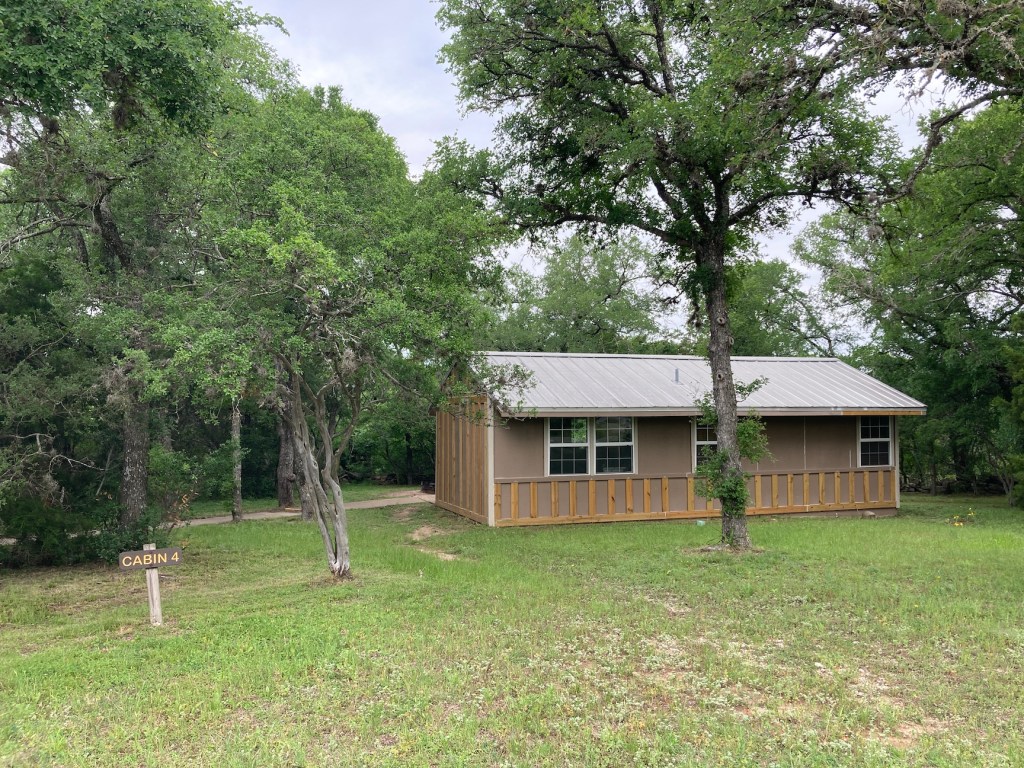
Recently, I slept Sunday night in a cabin at McKinney Falls State Park. I call it camping.
I like tent camping better. But the logistics are more involved. I didn’t have time for that.
I was there on Sunday night, because that was the only night with a vacancy. And all the cabins were vacant.
Sunday nights can be unpleasant in tent grounds, because all the buzzards descend to scavenge the leftovers from the weekend campers. That’s not a problem in the cabin area.
The weekend had been rainy and the ground was wet. Rain was a chance, but it didn’t fall.
I cooked a simple supper (leftovers from the fridge at home) then I sat outside to watch the light fade from the eastern sky behind the trees. I let my mind wander through memories of my many camping trips there. At dark I went inside to write in my journal for a while.
At dawn I started getting ready to hike. It took a little while. I knew just where to go.
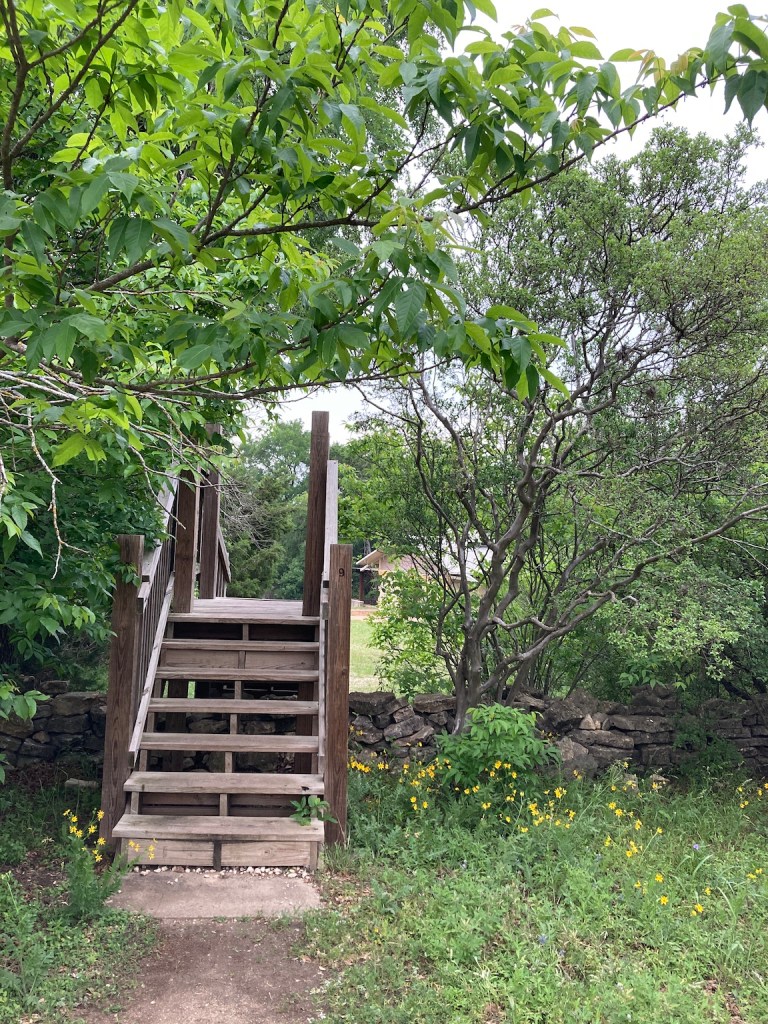
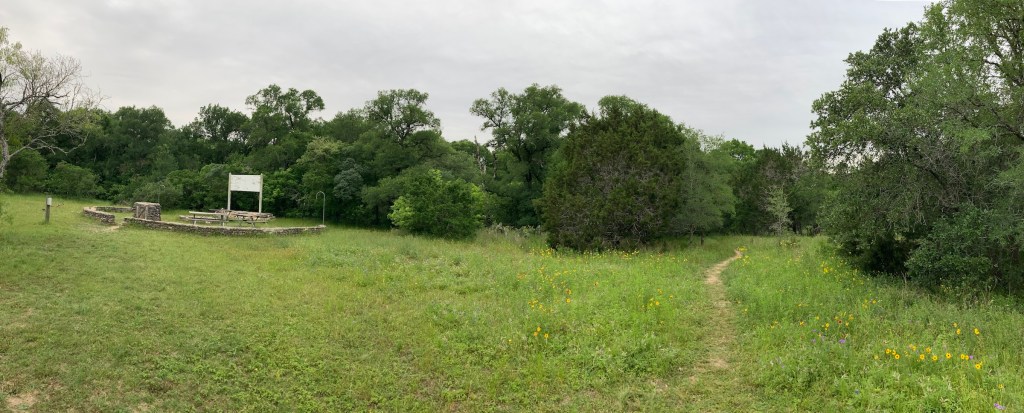
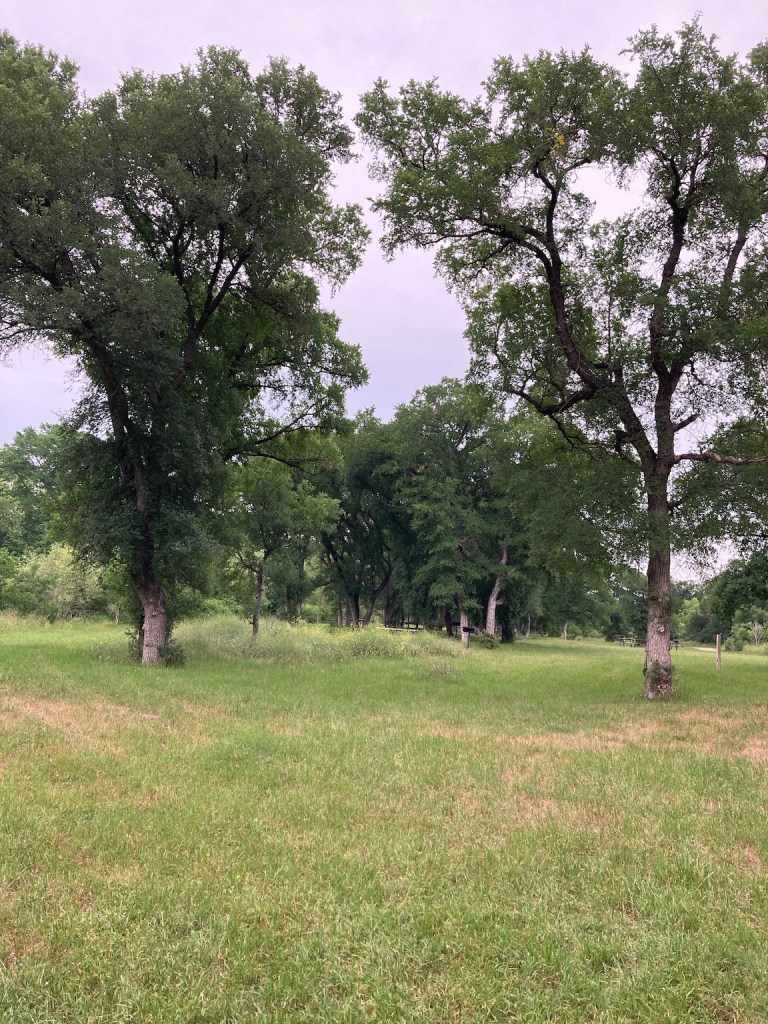
Starting from the cabin grounds I crossed the style to the dining hall grounds, skirted by the little amphitheater, and followed the path through the trees and brush down to the shaded long-grass lawn lining the creek.
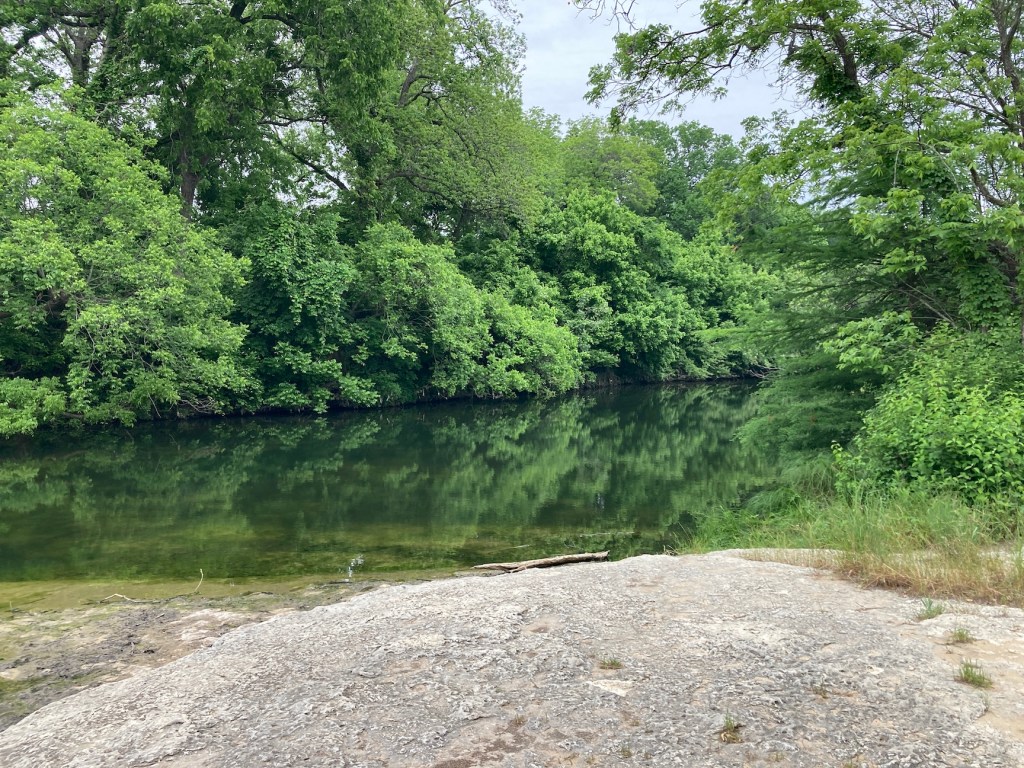
I walked down beside the creek. Tall trees edged the far side of the water. The water ran clear and deep. Far upstream, it flowed out of the limestone hills, then through the city, and now approached its escape.
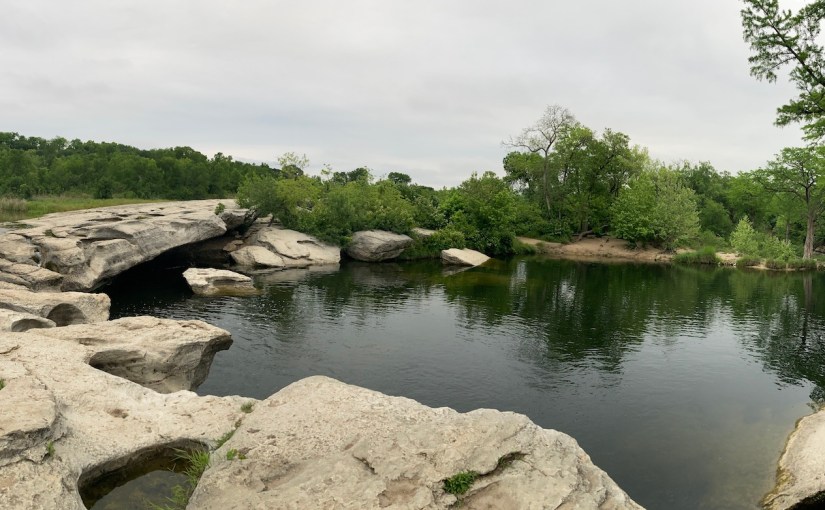
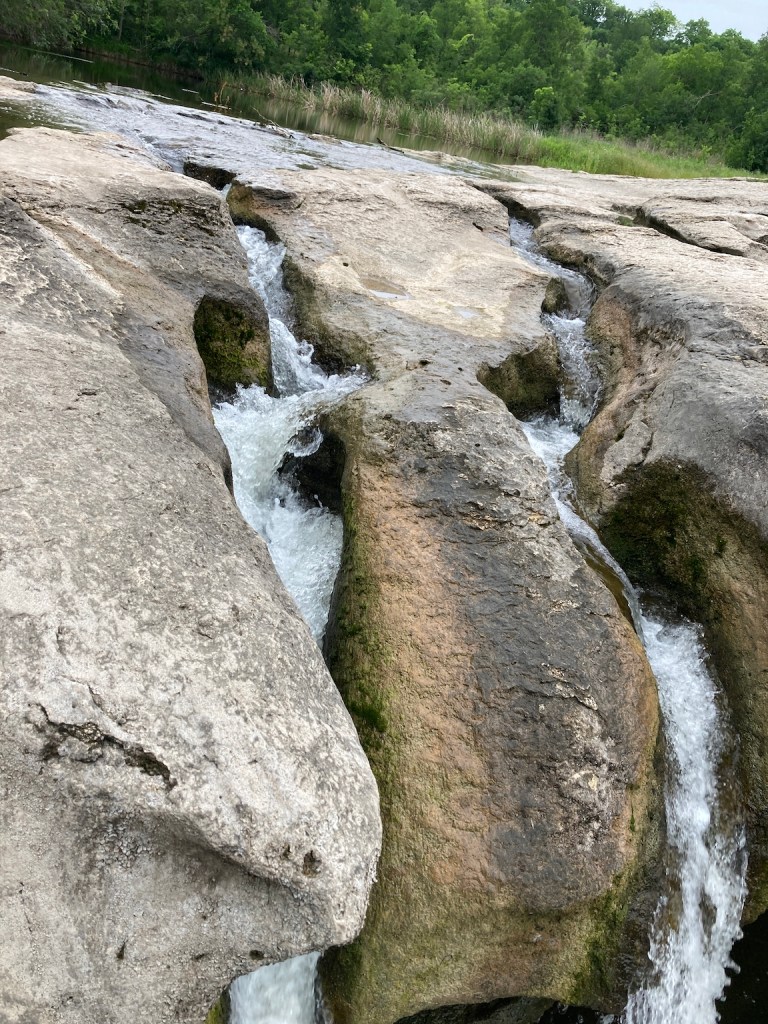
At the downstream end of the lawn I stepped out onto the limestone shelf that drops the falls. Across the fall pool, a few herons woke up and started making their way downstream under cypresses, escaping around the bend. I watched the water fall and listened to the low roar.
Once, I thought I would escape this land. No, I didn’t. I didn’t want to escape. I just wanted to get away. And I did. But I came back. I always come back.
My MacBook Air sits in a box in my study. It came back from the Apple repair depot about a week ago. I haven’t unwrapped it.
Normally, I would be in a happy rush to get the operating system set up, to get the applications installed, to load the documents, and to establish my file structures. Not this time. I’m dreading it.
I’ve already gone through those drills twice in two months. Those were the high points of hours and days and weeks of troubleshooting and emergency backups and Apple support chats.
On top of that, the MacBook was my main machine. So when I realized it was going down, I scrambled to set up an old Mac mini to take the workload. And then the MacBook did go down. So, I bought a new Mac mini. I set that up to serve as the main machine and made the old mini my backup machine.
So, I’ve done virtually the same setup and rebuild four times in two months. It wasn’t as easy as I thought it would be.
I had a Time Machine backup of the MacBook, so I planned to use Migration Assistant to smoothly move my entire MacBook setup to the new machine. But the Apple specialists suspected the problem with the MacBook could be in the software, so using the backup could move the problem to the new (and repaired) Mac. That meant I had to do everything one laborious step at a time.
Try entering four dozen passwords manually. Four times! (Don’t talk to me about iCloud Keychain.)
I had to extract the document files, and I made several emergency backups, buying several external hard drives to deal with all the files. Now, I have to sort all those out.
The trouble began with some keyboard entry errors. I decided to restart the Mac, so I started quitting applications. The apps refused to quit. Then the Mac went through a kernel panic, crashed, and refused to restart.
That was my first trip to the Apple Store Genius Bar. The specialist took it into the back and “blew the dust off the logic board.” Miraculously, it started up! He gave it back to me.
A week later I was back at the Genius Bar. The specialist kept it for a few days, erased the hard drive, and reinstalled the OS. He called that a software repair.
My first re-setup of the MacBook did not go well. I plowed forward through multiple system errors and crashes over two days to reach the point that I could migrate the documents and make an emergency backup. Then, it crashed.
My third trip to the Genius Bar convinced the specialists that this was serious. They shipped it to one of their depots, where serious repairs are done to seriously disturbed Macs. When it came back, the packing sheet listed a half dozen replaced parts beginning with the logic board. That ought to fix it.
I went through the laborious and tedious setup almost without mishap. The MacBook seemed to do fine for about a month.
I wasn’t using it much. I had shifted all my work to the Mac mini, and I wasn’t going to shift it back. I used the MacBook in my spare time for low-intensity chores like typing text and sorting through emergency backups. Then it showed a few warning signs. Then it had a kernel panic. I knew what was coming. Sure enough, the next day it was dead.
On my fourth trip to the Genius Bar, the Genius was just going through the motions. He kept assuring me about how they respected all the time I had put into this machine. (Sure.). They were going to send it back to the depot and fix it right, by golly!
One thing I’ll say: the repair depot is quick.
So here it is. I can’t get any enthusiasm for it. I don’t even need it now, really. I’m wondering how to calculate the mean time before failure. They still haven’t even diagnosed the problem. They just replace parts.
But, I can’t just let it sit in the box forever. I have to rebuild it again.
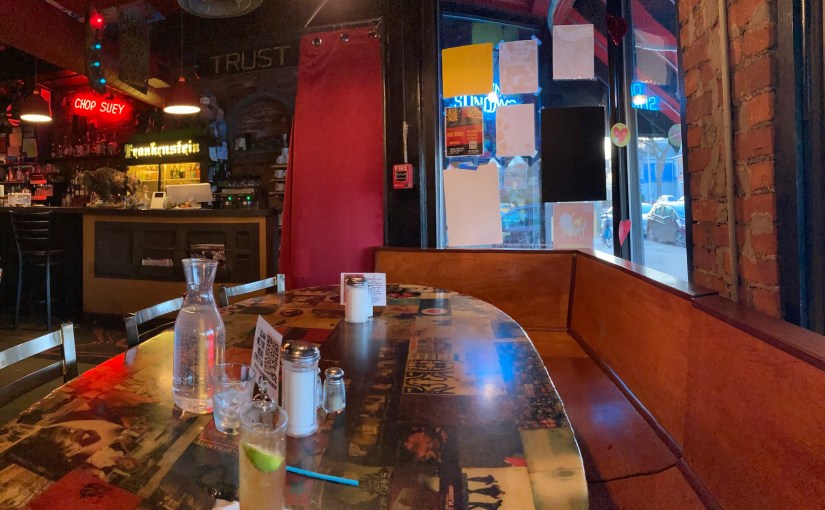
At Julian’s. I walked over in sunshine, but as I walked the sun dropped below the rooftops, casting the streets in shadow. I’ll walk home in the dark, and that’s fine, but not as good as the sunlight.
That’s the trade off. I could have walked in the broad daylight, but I would have had to go back to work. Now, I get the fading light, but I’m free.
All I can tell you is that I went through dislocations, international intrigue, misfortune, determination, friendship, relocation, and escape. Obstacles kept arising, and I kept stumbling over them, supported by loved ones.
When the surge of time became a flow again, I found myself here, in Rhode Island. I found some writers. We talk. We don’t really know each other yet, but I see possibilities.
These writers are putting on a public reading called Emergence. Local poets and other writers will read on the subject. I’ll be there. I’ll read.
As it happens, I have a poem that has been waiting quietly since 1979 for this moment. Forty years patient in the journal. Now it will emerge. I’ll have some printed folios for those who want one. Art added by Sean Haworth.
The reading will take place across the street from Blake’s Tavern, in front of a mural called Adventure Time. That’s Thursday, August 5, at 7 to 9 pm at Washington and Matthewson in Providence, Rhode Island.
This event is hosted by What Cheer Writers Club in partnership with The Avenue Concept and in collaboration with PVDFest. It was made possible by generous funding from the Providence Tourism Council.
Edited thanks to the Tilted Planet Editorial Board.
Last month I visited Providence, Rhode Island, getting to know the city. I plan to establish a summer home here next spring. I’ll keep my permanent residence in Austin, but I’ve had it with Texas summers.
I’m a climate crisis refugee. I was born and raised in Texas, and I’ve always been glad of my heat tolerance. I’m comfortable up to 95 degrees. But now we have two months of the year when the mercury shoots up past 100. I’m tired of hearing weather casters tell me not to go outside in the afternoon.
I’m not the first climate migrant. People fleeing drought and flood have been on the move for a generation. It’s global, but it has been mostly a third world movement. Now the first world is beginning to feel it.
It’s possible to ignore the rising heat if you live in air conditioned spaces. But you have to be content to give up summer afternoons. I’m not.
Ironically, that air conditioning that shelters us from the heat outside makes the heat outside worse. The air conditioners use power from plants that exhaust greenhouse gases. And the air conditioners themselves pump heat out to the air. It’s a positive feedback loop. The hotter the environment, the more we use the air conditioner. The more we use the air conditioner, the hotter the environment.
I’m moving away from that loop. Of course, there’s no real escape. There’s another effect. Providence is in the hurricane zone. And with the climate crisis, hurricanes are growing stronger and more numerous.
I took a riverboat tour on the Providence River. The captain told tales of hurricanes past, and he pointed to a gated flood barrier high enough to keep out the flood surge of the worst hurricane on record. But the storms are growing stronger. It’s only a matter of time until a storm surge overwhelms that sea wall. And then another. Then there will be a new wave of climate migrants. More people on the move.
But for now, Providence is a great little city.
(Photos by Robin Cravey unless otherwise noted).
Feature image above: Downtown Providence. Photo by Jeffee Palmer. The city seen from the river.
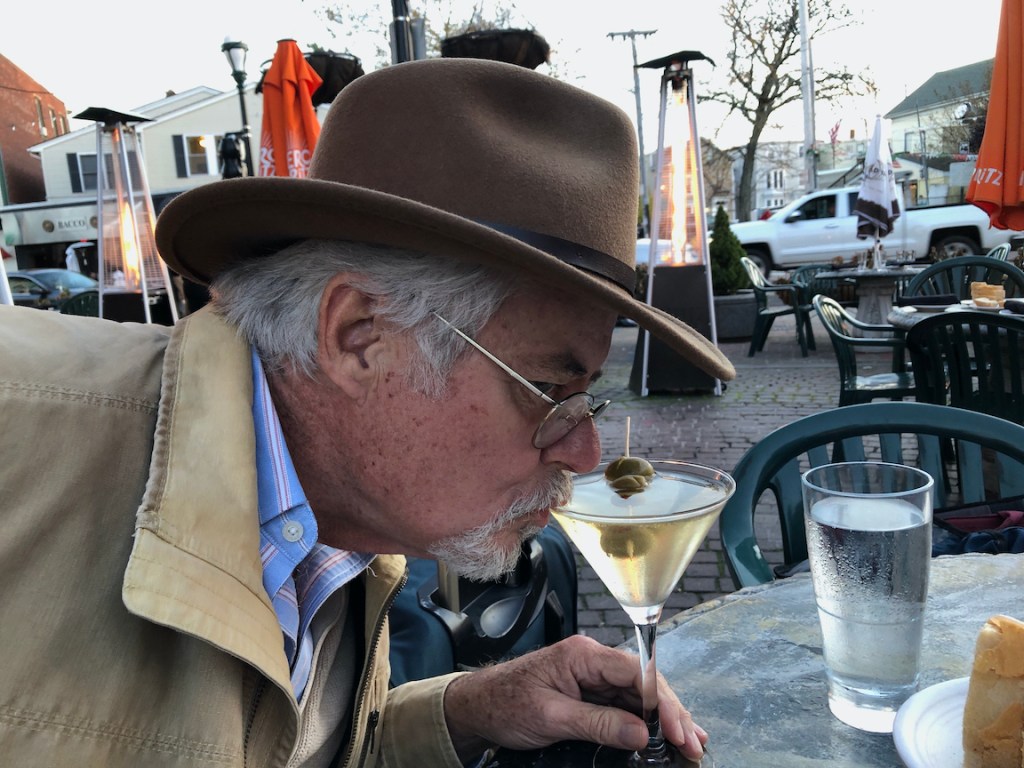
Venda Bar & Ristorante on Atwells St. in Federal Hill. The broad plaza next to the historic Italian eatery serves as an open-air meeting place and hangout. Their martinis are outstanding. Stretching away in either direction are blocks of old storefronts offering bars, restaurants, and Italian delis.
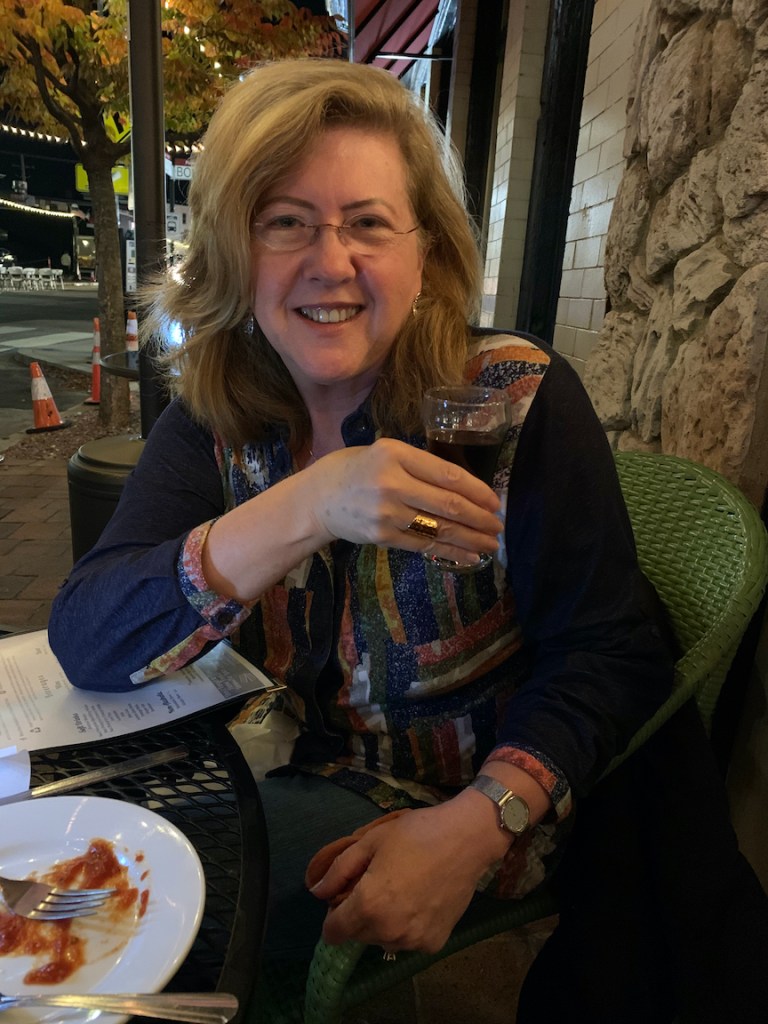
Jeffee Palmer was my intrepid guide during the first part of my stay in Providence. She had never been there before, but she had a guidebook, and she knew how to use it. We had great adventures. Here we are dining outside on Atwells on a weekend night when the street is closed to cars.
Martinis at Venda’s. Photo by Jeffee Palmer. The martinis are so big you can’t pick them up until you drink some out. They pack a wallop!
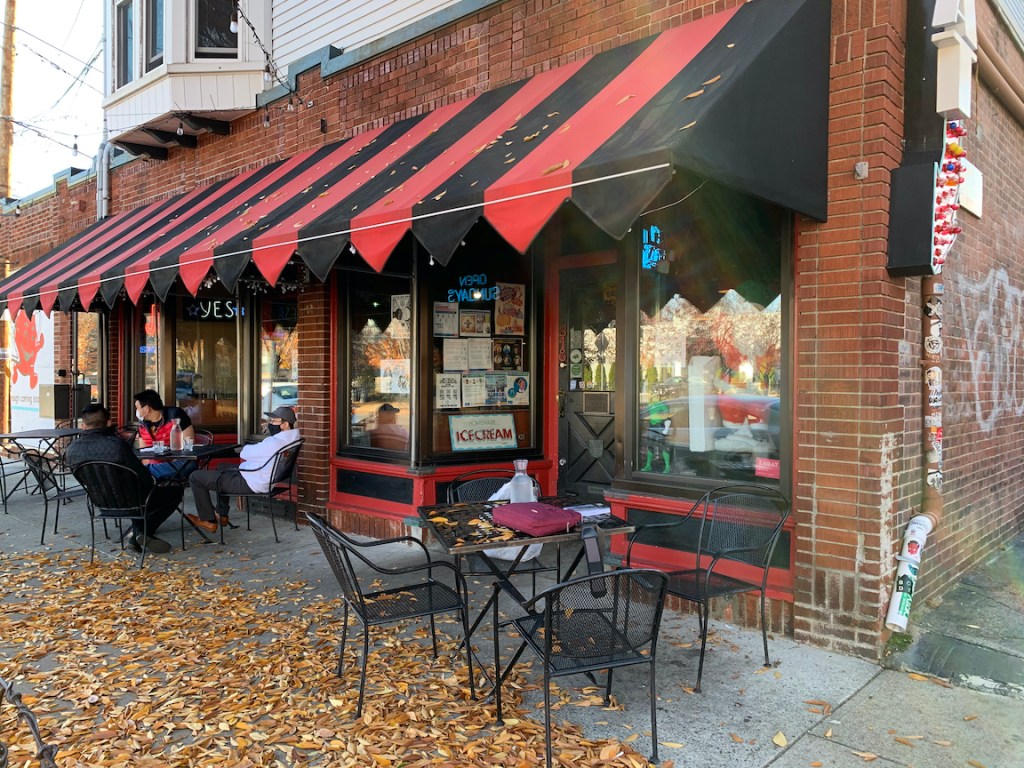
Julian’s is a comfortable restaurant on Broadway that runs from breakfast to late night, serving up good food, drinks, and friendliness.
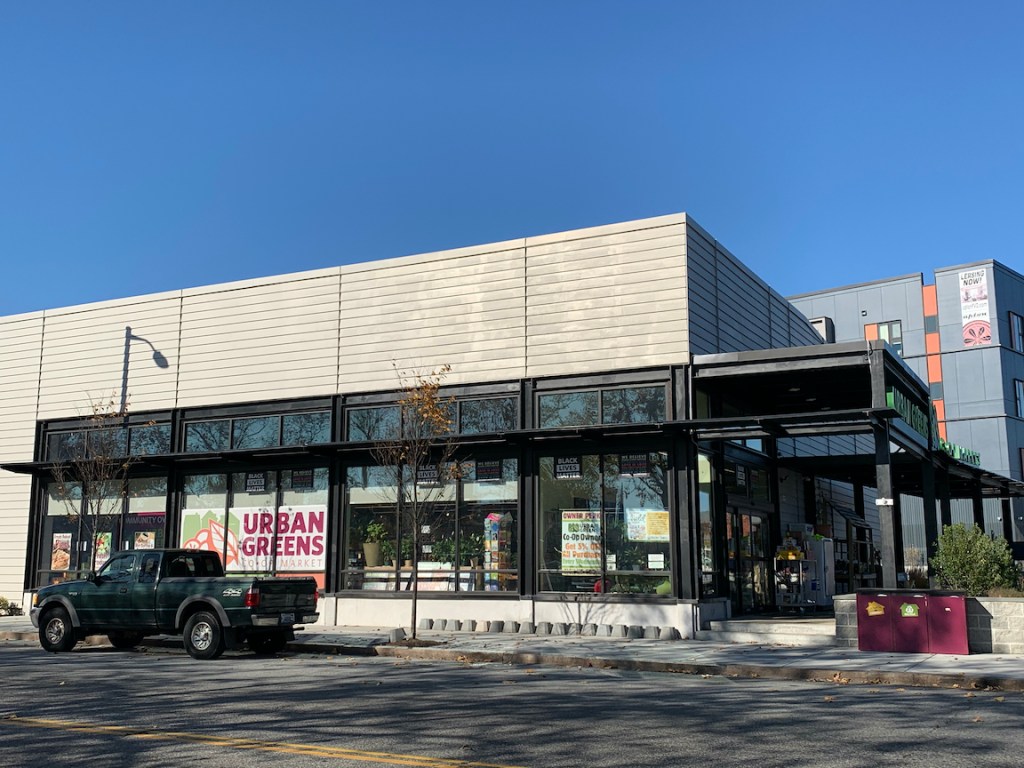
Urban Greens is the food coop in Providence, with a modern store but about the size of the early Wheatsville location on 29th Street.
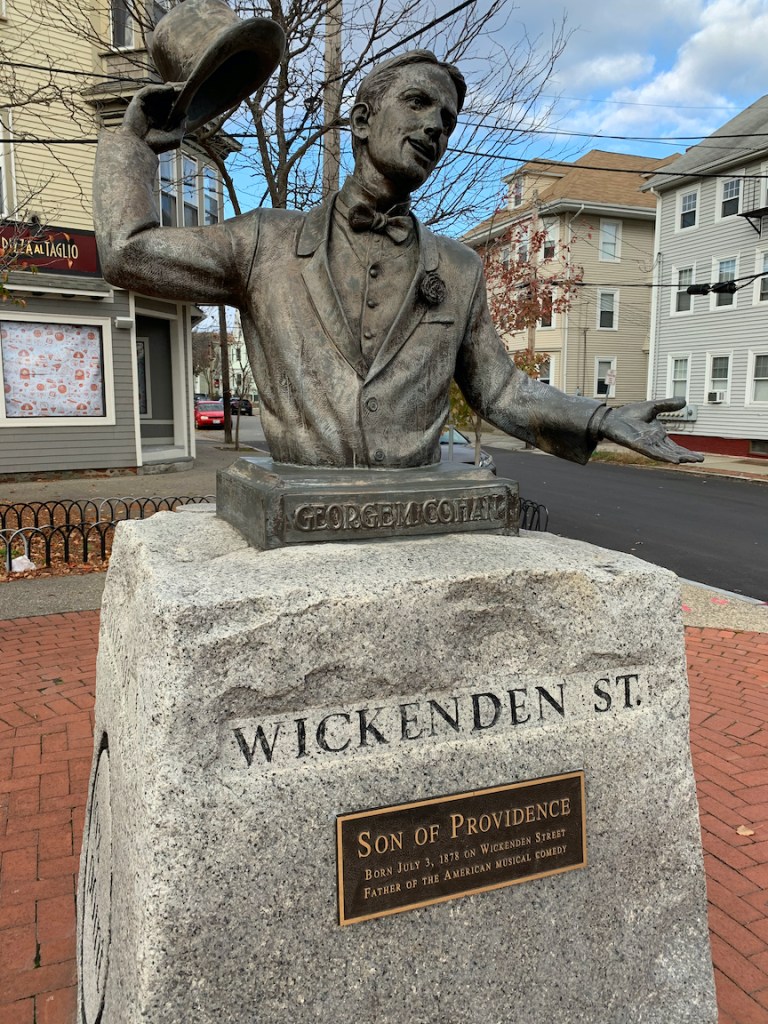
George M. Cohan was a native of Providence, and they’re proud of their yankee doodle dandy. His statue stands in the heart of Fox Point.
The Point Tavern takes its name from Fox Point, east and near the mouth of the Providence River.
Fox Point Hurricane Barrier was built to protect the city from hurricane storm surge. It looks pretty high, but then the Galveston Seawall looked high until the hurricanes started running over it. The bridge lies beyond it.
Trinity Brewhouse is one of several good pubs in downtown Providence. So many pubs, so little time!
Donald Trump, despicable demagogue, has been defeated. This is the victory of a lifetime for Joe Biden. But it’s a Pyrrhic victory for Democrats.
Trump is two steps down from Richard Nixon. William F. Buckley gave an apt defense of Nixon. When someone called Nixon a tenth-rate politician, Buckley retorted that Nixon may have been a tenth-rate man, but he was a first-rate politician. Trump is a tenth-rate man and a third-rate politician. His one talent is fulminating.
His talent for fulminating was enough to make him president of the United States, and that is a fearsome revelation of the state of the States. A substantial minority of citizens is ready to burn the country down. And they are waiting for a man with a torch.
Why? Who are they? They are poor, uneducated, and asocial. They live in the big empty spaces of our country, where they eke out a living and glare enviously at the wealth of city-dwellers. When I write that they are willing to burn the country down, I mean they are willing to burn the cities down. Trump’s fulminations are a cocktail for them.
Well, it’s not that simple. They live on a political spectrum of the right from fascists through reactionaries to conservatives.
Biden won by soothing the fears of the conservatives. That wasn’t the only way to win, but that’s the way he won. As the Democrats always do, Biden made the calculation that the left would support him because where else are they going to go? And as they always do, centrist Democrats are now busy demanding that the left shut up and not upset the right.
If the nihilism of the right is a harsh kind of insanity, the appeasement of the center is a soft kind. It’s the insanity of doing the same thing and expecting a different result. It’s Mike Dukakis thanking George Bush* for not using the “L” word.
The centrists achieved a tepid victory. Considering the mortal danger we are in, the Democrats made a pitiful showing. They won’t have the strength to do much. How is it that when the Republicans win power, they can do tremendous damage, but when the Democrats win, they can barely manage to do some deferred maintenance?
A more perfect union: step by step. Republicans worked for two generations to take control of the courts. Democrats can take control of the House and the presidency in just one generation. And we can rein in the Supreme Court.
First, expand the House. It hasn’t been done in four generations. Even setting aside the improved representation, this solves several problems. It reduces gerrymandering. It changes the balance of the electoral college. It changes the number of state delegations controlled by each party. It shifts representation toward the cities, where the people are.
Second, expand the Supreme Court. It hasn’t been done in six generations. Also, limit the jurisdiction of the Supreme Court. For example, take away the authority to invalidate acts of Congress. Also, rotate the membership on the Supreme Court among all the appellate judges.
The steps outlined above can be taken with simple acts of Congress. Of course, that requires that Democrats have full control of both the House and the Senate as well as the Presidency. What if we don’t win the two Georgia Senate seats? Below are two steps that might get through a divided Congress.
Third, develop the Dakotas. Three generations ago FDR flew over the South and saw its backwardness. He took the initiative to develop it. Now, three generations later, that investment is paying off. Developing the Dakotas would be the same investment, and because those states are basically empty, the investment required would be smaller and would pay off sooner.
Several developments can draw educated and diverse citizens to the Dakotas. First, establish a major city of at least half a million residents in each state. Make some land grants. Locate a substantial Federal government center there. Also, create an industrial center that would attract major employers like Amazon or Google or Apple. This would bring in educated residents who could have a major impact on the culture of the state. A large center for environmental stewardship of public lands could be a liberalizing influence. These moves would immediately pay dividends by providing employment and hope to the region.
Fourth, expand federalism. Renovate interstate compacts and floor pre-emption. Provide for a comprehensive system of interstate compacts that can handle issues on a regional level that don’t command a majority on the national level. With floor preemption, the federal government sets minimum standards, and the states, or the interstate compacts, set higher standards. This is already done in a hodgepodge fashion. Rationalize it.
Beware of nullification. Nullification is the theory that a state doesn’t have to follow an act of Congress that it believes is unconstitutional. It was favored by Jefferson until he was elected president. Then it was disgraced by John C. Calhoun, who used it to protect slavery. The right has used nullification to restrict abortion. The current very successful movement to legalize marijuana is basically an exercise of nullification. Regardless of federal law, the states are legalizing it. This is dynamite. Handle with care.
Finally, expand the Senate. This one requires an amendment to the Constitution. This is the long game. It can be incubated in the interstate compacts. Provide that every state will receive one senator for every two (or three) members of the House. Sure, keep the minimum of two senators per state. This will complete the democratization of our government.
Trump will leave fulminating against our democracy. It is up to us to choose whether we will simply stand pat on eroding ground or fix the foundation.
Democrat at the breakfast table.
The Helsinki Syndrome
I had to correct this, after I remembered that Dukakis did not run against Reagan. So, was it Mondale who said it to Reagan, or Dukakis who said it to Bush?
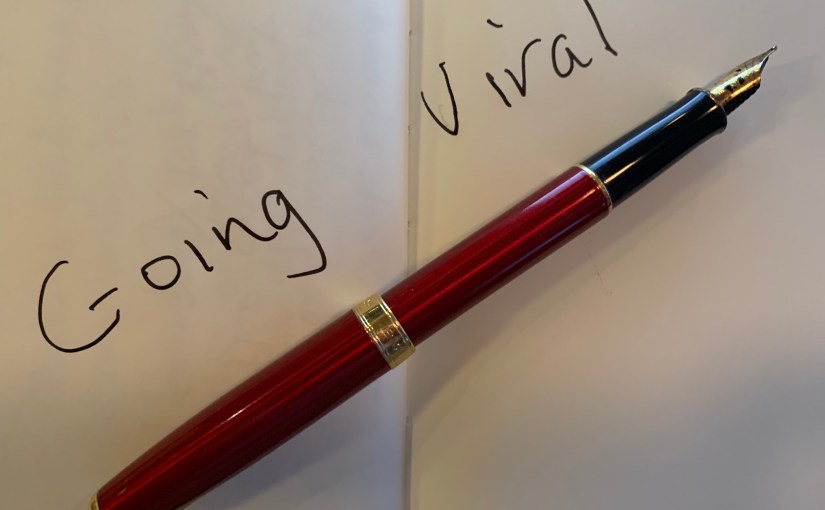
These days, everybody who’s nobody wants to go viral. Going viral is one way a nobody can become a somebody. Then you can tell your name the livelong day to your admiring blog.
So, you want your viral moment. But then, you want another. You don’t want to be a one- hit wonder. And then, people will ask, How big is your blog?
How big is your blog? A thousand hits (not viral). A million hits? (yes, viral) A billion hits? (pandemic!)
So, if you want to go viral, I’ll tell you how I do it. Just email this blog to everyone in your address book. Also, post it on Facebook and tag all your friends. Check back next month to see if I’m viral. If yes, try this. If no, thanks for playing.
See, there’s a validation mechanism built into this con. Way better than a chain letter. How can you lose?
On a day when there’s water in Barton Creek, it’s a running oasis refreshing visitors. It’s a source of joy and a scene of friendship. And Barton Springs is our city’s main attraction in the world. But the creek and the springs have many facets. No savage clans ever fought harder over a source of water than the people of Austin have fought outsiders and each other over Barton Creek and Barton Springs. And preserving those waters has been a labor of love for many.
So the creek and the springs have touched many lives in many ways. They have left sweet dreams and memories, but also scars and bitterness. It’s a big story. And Karen Kocher has done much to tell that story, or those stories.
Karen’s latest work, the Barton Creek Time Stream, is a great attraction that you won’t see at Barton Springs this summer, thanks to the pandemic. But, you can see it in a virtual tour on September 10 at 6:30 pm.
Early this year, Karen invited folks to write something for the exhibit. I wrote about some of my experiences with the creek and the springs, and she whipped me through several rewrites until she was happy with it. She gave me permission to post it here.
My essay comes in three parts. First is a short history of my involvement with the springs. It’s not so short. Second is a short paean to the dynamic geology of the aquifer, the creek, and the springs. Third is a tutorial in how, when the creekflow is good, you can climb the creekbed horizontally.
All this might start you thinking about getting involved with the creek and the springs yourself. You ought to. It’s fun, and there’s a lot to do.
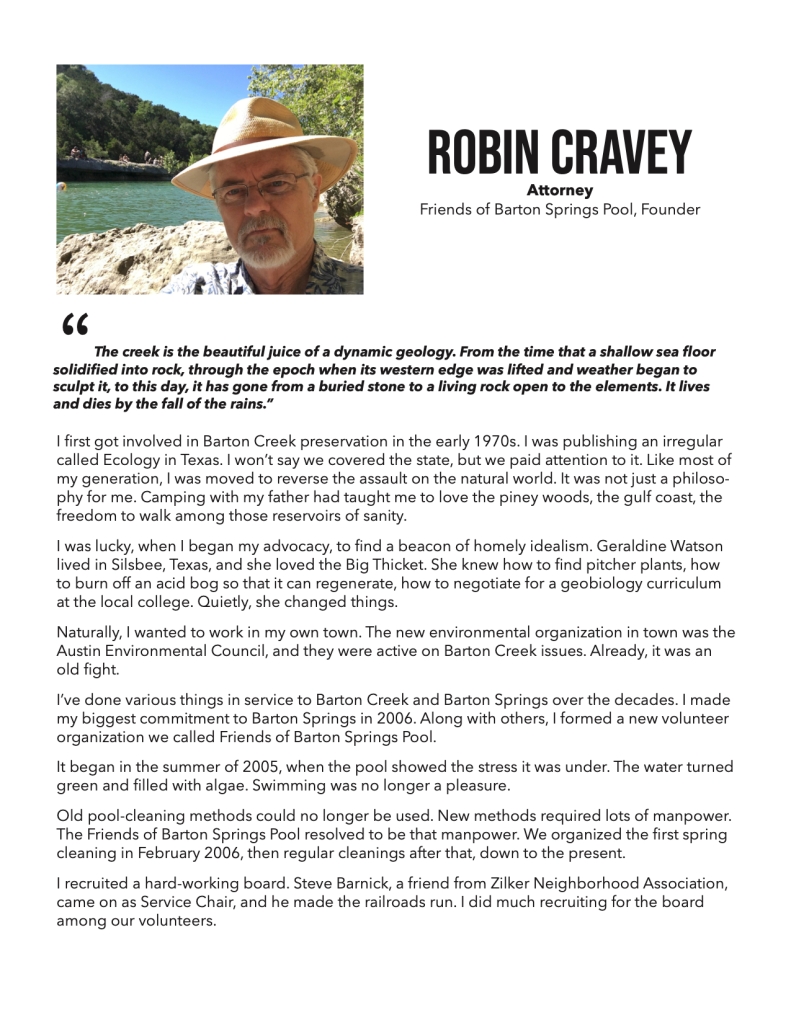
I made my biggest commitment to Barton Springs in 2006. Along with others, I formed a new volunteer organization we called Friends of Barton Springs Pool.
The creek is the beautiful juice of a dynamic geology.
Horizontal creekbed climbing is the spontaneous engagement with a current of the right force.

















 RobinCravey